Android 17 Media Player Redesign: Google’s Biggest Android UI Upgrade in Years
Overview:
Google is redesigning the Android 17 media player with a modern card-based interface that improves multitasking, media switching, and lock screen usability. The Android 17 media player redesign introduces stacked playback cards, smarter controls, Material You enhancements, and AI-powered personalization features. The update is expected to improve user engagement, premium Android experiences, and overall smartphone usability across Pixel and flagship Android devices.
Android 17 Media Player Redesign Brings a Premium New Experience
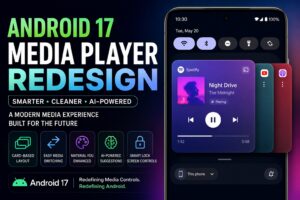
Google is preparing one of the most noticeable Android interface upgrades in recent years. The Android 17 media player redesign introduces a modern card-based layout that completely changes how users interact with music, podcasts, videos, and streaming apps on Android smartphones.
For years, Android users complained about cluttered notification controls and confusing media switching. Google has finally addressed those issues with a cleaner and more intelligent interface built around usability, personalization, and AI-driven experiences.
The Android 17 media player redesign is already generating huge interest across the technology industry because it combines premium UI aesthetics, smarter multitasking, and advanced AI integration into one polished update. The redesign also reflects Google’s larger strategy of turning Android into a more adaptive and intelligent operating system powered by Gemini AI.
This latest Android 17 update could become one of the most important mobile software upgrades for smartphone users, app developers, streaming services, and advertisers targeting high CPC technology traffic.
What Is the Android 17 Media Player Redesign?
The Android 17 media player redesign replaces the old carousel-style notification controls with a visually organized card-based system. Instead of tiny swipe arrows and cramped controls, users now see multiple media sessions displayed as layered cards inside the notification shade and lock screen.
This makes switching between apps significantly easier.
For example, users listening to Spotify while watching YouTube or streaming Netflix can instantly move between active sessions without navigating confusing controls.
The Android 17 media player redesign focuses heavily on:
- Faster navigation
- Cleaner notification management
- Better accessibility
- Improved multitasking
- Premium animations
- AI-powered personalization
Google appears to be redesigning Android around a more immersive and intelligent user experience, especially for media consumption.
Why Google Redesigned Android Media Controls
Media playback has become one of the most important smartphone activities globally. People constantly switch between:
- Music apps
- Podcasts
- Video streaming platforms
- Social media videos
- Browser playback
- Gaming audio
The older Android media system struggled to handle multiple sessions smoothly. Notifications often became cluttered, making it difficult for users to manage playback efficiently.
The Android 17 media player redesign solves these problems with a more visual and organized approach.
Google likely redesigned the interface for several reasons:
Better User Experience
The new interface reduces confusion and improves navigation speed.
AI Integration
Google is preparing Android for deeper Gemini AI integration that can personalize media experiences.
Premium Android Feel
The redesigned controls make Android feel more polished and modern, especially on flagship devices.
Improved Engagement Metrics
Cleaner UI systems often increase app interaction time and streaming engagement.
Card-Based Layout Changes Everything
The biggest feature in the Android 17 media player redesign is the new stacked card system.
Instead of scrolling through tiny horizontal controls, users now see media sessions displayed as larger visual cards. Each card includes:
- App icon
- Playback controls
- Album art
- Media information
- Interactive transitions
This design improves usability dramatically because users can quickly identify which app is currently active.
The card-based layout also feels significantly more modern compared to older Android versions.
Many Android enthusiasts are already comparing the redesign to premium UI experiences seen in modern flagship smartphones.
Android 17 Material You Enhancements
Google continues expanding Material You customization in Android 17.
The redesigned media player dynamically adapts:
- Background colors
- Accent themes
- Blur effects
- UI animations
- Visual transitions
The result is a highly personalized interface that changes based on wallpapers and user preferences.
Material You has become one of Android’s strongest visual features, and the Android 17 media player redesign pushes it even further.
This personalization strategy helps Android stand out from competing ecosystems by offering deeper visual customization.
Smarter Lock Screen Media Controls
Another major improvement in the Android 17 media player redesign is the upgraded lock screen experience.
The new controls are:
- Larger
- Cleaner
- Easier to access
- More responsive
- Better optimized for foldables
Users can now manage playback without unlocking their devices or struggling with small buttons.
Album artwork also appears more prominently, giving the lock screen a richer and more premium appearance.
This redesign is particularly important for:
- Foldable smartphones
- Large-screen Android devices
- Tablets
- Premium flagship phones
Gemini AI Could Transform Android Media Experiences
Google’s AI strategy is becoming increasingly important inside Android.
The Android 17 media player redesign appears designed to support future Gemini AI features such as:
- Personalized playlists
- Smart recommendations
- Context-aware playback
- Voice-controlled navigation
- AI-generated media summaries
- Intelligent listening habits
Google wants Android devices to predict user behavior and automate experiences intelligently.
This AI-first strategy could help Android compete more aggressively against Apple’s ecosystem.
The integration of AI into everyday smartphone experiences is expected to become one of the biggest trends in the mobile industry over the next few years.
Android 17 Could Improve Streaming App Performance
Streaming apps may benefit significantly from the Android 17 media player redesign.
Apps like:
- Spotify
- YouTube Music
- Netflix
- Amazon Prime Video
- Audible
- Pocket Casts
could see improved user engagement because the new interface encourages easier media switching and smoother interaction.
Better playback controls often increase:
- Session duration
- User retention
- Streaming frequency
- Content discovery
- Subscription conversions
This makes the Android 17 redesign important not only for consumers but also for streaming businesses and advertisers.
Android 17 vs iPhone Media Controls
Google’s redesigned Android media controls are already being compared to Apple’s iPhone interface.
While Apple focuses heavily on ecosystem consistency, Android 17 emphasizes:
- Visual flexibility
- Deeper customization
- Better multitasking
- Adaptive AI experiences
The Android 17 media player redesign feels more dynamic and personalized compared to traditional iOS media controls.
Many analysts believe Google is attempting to position Android as the leading AI-powered mobile operating system.
Impact on Samsung, Xiaomi, OnePlus, and Other Brands
The Android 17 media player redesign will likely influence custom Android skins across the industry.
Major smartphone brands including:
- Samsung One UI
- Xiaomi HyperOS
- OnePlus OxygenOS
- OPPO ColorOS
- Vivo Funtouch OS
often adapt Google’s core Android design language.
As a result, the new card-based media controls could eventually appear across millions of Android smartphones globally.
This could help standardize premium UI experiences across the Android ecosystem.
Android 17 Focuses on UX Optimization
Google appears heavily focused on UX optimization in Android 17.
The redesigned media player improves:
- Touch ergonomics
- Visual hierarchy
- Accessibility
- Gesture responsiveness
- Notification organization
These improvements reduce cognitive load and make Android easier to use for both casual and advanced users.
Better user experiences typically increase:
- App engagement
- Ecosystem loyalty
- Subscription retention
- Device satisfaction
- Advertising revenue
This is one reason why the Android 17 media player redesign is attracting significant attention in the mobile technology industry.
Final Verdict:
The Android 17 media player redesign is more than a simple visual refresh. It represents Google’s broader push toward AI-powered mobile experiences, smarter multitasking, and premium Android usability.
The new card-based layout makes media playback cleaner, faster, and more visually appealing while laying the foundation for future Gemini AI features.
As Android 17 moves closer to its official release, this redesign could become one of the most important Android interface changes in years.

Rakesh is a digital publisher and SEO-focused tech writer covering technology trends, blogging strategies, affiliate marketing, and trending news. With expertise in search optimization and online growth, he delivers research-driven insights, practical guides, and timely news updates. His content focuses on helping readers understand digital trends, emerging technologies, and effective online publishing strategies in a rapidly evolving tech landscape.
Leave a Reply