Samsung Galaxy Watch Vascular Load Feature Removed in the US: Here’s What It Means for Users
Overview
Samsung has officially removed the Samsung Galaxy Watch Vascular Load feature for users in the United States ahead of the next Galaxy Watch software update. The feature, originally introduced as part of Samsung’s expanding health ecosystem, is being replaced by a new Blood Pressure Trend experience that aligns with regulatory requirements. The change affects future software versions and highlights Samsung’s continued focus on advanced wearable health tracking, AI-powered wellness insights, and FDA-compliant health monitoring technologies.
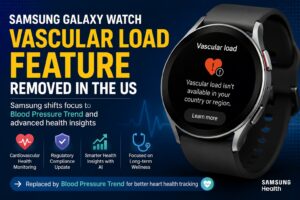
Samsung Galaxy Watch Vascular Load Feature Removed in the US Ahead of New Health Tracking Update
Samsung is once again expanding the capabilities of its smartwatch ecosystem, but one familiar feature is now disappearing for users in the United States. The Samsung Galaxy Watch Vascular Load feature is being removed before Samsung rolls out its next generation of wearable health experiences.
The decision comes as Samsung prepares to introduce more advanced health-monitoring tools powered by Galaxy AI and improved sensor technology. While international users may continue to access Vascular Load in supported regions, U.S. Galaxy Watch owners will instead receive a redesigned health experience centered around Blood Pressure Trend monitoring.
The update signals Samsung’s continued commitment to offering clinically meaningful health insights while adapting to changing medical regulations and certification requirements.
What Is the Samsung Galaxy Watch Vascular Load Feature?
The Samsung Galaxy Watch Vascular Load feature was designed to estimate the amount of stress placed on a user’s vascular system during sleep. Rather than functioning as a medical diagnosis tool, it analyzed overnight physiological signals collected through Samsung’s BioActive Sensor.
Using multiple health metrics, the feature attempted to provide users with a better understanding of cardiovascular wellness over time.
Unlike traditional heart-rate monitoring, vascular load focused on long-term health patterns instead of real-time exercise performance.
This positioned Samsung among the few smartwatch manufacturers exploring deeper cardiovascular wellness tracking through wearable technology.
Why Samsung Is Removing the Samsung Galaxy Watch Vascular Load Feature
Samsung’s decision is primarily related to regulatory compliance in the United States.
Health-related smartwatch features often require approval from regulatory authorities before becoming available in certain markets. Rather than continuing with the existing implementation, Samsung appears to be shifting toward a newer Blood Pressure Trend feature that better aligns with its long-term wearable health roadmap.
The company has increasingly invested in software experiences that combine AI-driven health analysis with clinically validated measurements.
For users, this means Samsung is focusing on providing health insights that can receive broader regional support while maintaining accuracy and compliance.
Blood Pressure Trend Will Become the New Focus
Instead of the Samsung Galaxy Watch Vascular Load feature, upcoming Galaxy Watch software is expected to emphasize Blood Pressure Trend monitoring.
This new capability aims to provide users with easier-to-understand changes in blood pressure patterns over time rather than isolated readings.
Some expected improvements include:
- Better visualization of long-term cardiovascular trends
- AI-powered wellness recommendations
- More personalized health insights
- Improved integration with Samsung Health
- Easier interpretation of daily health reports
This transition reflects Samsung’s broader strategy of making wearable health information more practical for everyday users.
How the Update Affects Existing Galaxy Watch Owners
Current Galaxy Watch users in the United States may notice that the Samsung Galaxy Watch Vascular Load feature is no longer available after installing future software updates.
Importantly, this change does not affect other core health tracking capabilities such as:
- Heart rate monitoring
- Blood oxygen measurement
- ECG support (where available)
- Sleep tracking
- Body composition analysis
- Stress monitoring
- Activity tracking
- Exercise detection
Most users will continue receiving comprehensive health insights through Samsung Health without major changes to their daily fitness routines.
Samsung’s Bigger Vision for AI-Powered Health Monitoring
Samsung has been steadily transforming Galaxy Watch devices into advanced health companions rather than simple fitness trackers.
Recent software updates have introduced smarter algorithms capable of analyzing multiple biometric signals simultaneously.
The company’s wearable strategy increasingly revolves around:
Personalized Health Intelligence
Instead of displaying isolated numbers, Galaxy Watches now interpret health data to provide meaningful recommendations.
Preventive Wellness Tracking
Modern wearable devices aim to identify long-term wellness trends before they become serious concerns.
Galaxy AI Integration
Artificial intelligence is expected to play a much larger role in analyzing sleep quality, heart health, exercise recovery, and daily wellness scores.
These improvements make Galaxy Watches increasingly valuable for users interested in proactive health management.
Why This Matters for Future Galaxy Watch Models
The removal of the Samsung Galaxy Watch Vascular Load feature isn’t simply about eliminating one tool—it reflects Samsung’s evolving healthcare strategy.
Future Galaxy Watch models are expected to introduce:
- More advanced BioActive Sensors
- Improved AI health coaching
- Smarter sleep analysis
- Enhanced cardiovascular monitoring
- Better battery optimization for continuous health tracking
- Personalized wellness reports powered by machine learning
Industry experts believe Samsung is building a unified health ecosystem that combines wearable hardware, artificial intelligence, and cloud-based analytics to provide richer health insights.
Samsung Galaxy Watch vs Competitors: How the Health Experience Compares
As wearable technology evolves, leading smartwatch brands are competing to offer more comprehensive health insights rather than simply tracking daily fitness. Samsung’s latest direction shows that the company is prioritizing smarter health analysis powered by artificial intelligence and long-term wellness monitoring.
Samsung Galaxy Watch
Samsung Galaxy Watch models provide an extensive suite of health tools, including:
- Heart rate monitoring
- Blood oxygen (SpO₂) tracking
- ECG support in supported regions
- Body composition analysis
- Advanced sleep coaching
- Stress monitoring
- Activity tracking
- AI-powered wellness recommendations
- Blood Pressure Trend (upcoming)
The removal of the Samsung Galaxy Watch Vascular Load feature does not significantly reduce the overall health capabilities of the smartwatch. Instead, Samsung appears to be simplifying its health ecosystem while introducing features that can serve a wider audience.
Why This Change Makes Sense
Many wearable manufacturers continuously refine software features based on user feedback, regulatory requirements, and advances in sensor technology. Replacing one feature with another is often part of a long-term strategy to improve usability and reliability.
For Galaxy Watch users, this means future updates are likely to focus on more actionable health insights instead of presenting complex medical-style metrics that may be difficult for everyday users to interpret.
Expert Analysis: What This Means for Wearable Health Technology
The removal of the Samsung Galaxy Watch Vascular Load feature reflects a broader trend in the wearable industry.
Instead of adding dozens of niche health metrics, smartwatch manufacturers are now emphasizing features that users can easily understand and incorporate into their daily routines.
Industry analysts believe future smartwatch software will increasingly rely on:
AI-Powered Health Analysis
Artificial intelligence can identify long-term patterns that are difficult to detect from individual health readings. This allows users to receive more personalized recommendations based on their lifestyle and historical data.
Continuous Preventive Monitoring
Wearables are shifting toward preventive healthcare by encouraging users to recognize gradual changes in sleep quality, cardiovascular wellness, stress levels, and recovery before they become larger concerns.
Smarter Integration Across Devices
Samsung continues to strengthen the connection between Galaxy Watch, Samsung Health, Galaxy smartphones, and Galaxy AI. This integrated ecosystem allows health data to be presented in a more meaningful and personalized way.
What Samsung Could Introduce Next
Looking ahead, Samsung is expected to continue expanding its wearable health platform with new software capabilities and AI-powered experiences.
Potential future improvements include:
- Enhanced sleep quality scoring
- More advanced heart health analysis
- Personalized fitness coaching
- Smarter recovery recommendations
- Improved stress management insights
- Expanded Galaxy AI health reports
- Better integration with healthcare services where available
These updates could further position Galaxy Watch as one of the leading smartwatches for users seeking a balance between fitness tracking and everyday wellness.
Should Galaxy Watch Users Be Concerned?
For most users, the answer is no.
The removal of the Samsung Galaxy Watch Vascular Load feature is a software change rather than a hardware limitation. Core health and fitness functions remain available, and Samsung continues to invest heavily in expanding its wearable health ecosystem.
Users who regularly monitor sleep, exercise, heart rate, body composition, and overall wellness can continue using their Galaxy Watch as before. The transition to Blood Pressure Trend monitoring may even provide clearer and more practical insights for everyday health tracking.
Frequently Asked Questions (FAQs)
Why is Samsung removing the Samsung Galaxy Watch Vascular Load feature?
Samsung is replacing the feature in the United States as part of its updated health monitoring strategy and to better align with regional regulatory requirements.
Will my Galaxy Watch stop tracking my health?
No. Existing health features such as heart rate monitoring, sleep tracking, blood oxygen measurement, body composition, stress tracking, and activity monitoring will continue to function.
What replaces the Samsung Galaxy Watch Vascular Load feature?
Samsung is introducing a new Blood Pressure Trend experience that focuses on long-term cardiovascular patterns rather than vascular load estimates.
Which Galaxy Watch models are affected?
The software change primarily affects supported Galaxy Watch models receiving upcoming Samsung Health updates in the United States.
Is this a hardware issue?
No. The update is software-related and does not indicate any problem with Galaxy Watch sensors or hardware.
Final Thoughts
The removal of the Samsung Galaxy Watch Vascular Load feature marks another step in Samsung’s ongoing evolution of wearable health technology. Rather than reducing functionality, the company is refining its approach by focusing on health tools that are easier to understand, more practical for everyday use, and better aligned with regulatory standards.
As Samsung continues integrating Galaxy AI, advanced BioActive Sensors, and smarter wellness analytics into future Galaxy Watch models, users can expect a more personalized and intelligent health experience. While the vascular load feature may no longer be available in the United States, the broader direction suggests Samsung is investing in long-term innovation that enhances preventive healthcare and daily wellness tracking.
For Galaxy Watch users, this transition represents a shift toward a more streamlined and AI-driven health ecosystem—one designed to deliver meaningful insights while maintaining the trusted fitness and health features that millions of users rely on every day.

Rakesh is a digital publisher and SEO-focused tech writer covering technology trends, blogging strategies, affiliate marketing, and trending news. With expertise in search optimization and online growth, he delivers research-driven insights, practical guides, and timely news updates. His content focuses on helping readers understand digital trends, emerging technologies, and effective online publishing strategies in a rapidly evolving tech landscape.
Leave a Reply