Apple Quantum Encryption: How Apple Is Using Advanced Math to Defend Against Next-Generation Cyber Attacks
Overview:
Apple is strengthening its cybersecurity infrastructure with advanced post-quantum encryption technology designed to protect iPhones, iCloud, and digital communications from future quantum-computing attacks. By using highly advanced mathematical cryptography systems, Apple aims to secure user data against next-generation cyber threats and AI-powered hacking techniques.
Apple Quantum Encryption Could Redefine the Future of Cybersecurity
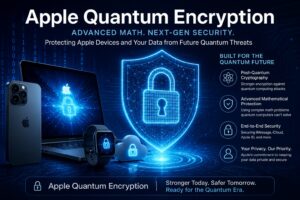
The global cybersecurity landscape is changing faster than ever, and Apple is preparing for a future where traditional encryption may no longer be enough. As quantum computing technology rapidly advances, security experts are warning that many of today’s encryption systems could eventually become vulnerable to next-generation cyber attacks.
To stay ahead of these threats, Apple is investing heavily in quantum-resistant encryption powered by advanced mathematics. This move is designed to protect billions of devices, cloud services, financial systems, and private user data from future hacking attempts driven by quantum computing and artificial intelligence.
The company’s latest security initiative represents one of the most significant upgrades in modern cybersecurity infrastructure. Apple quantum encryption technology is now becoming a major topic across the tech industry because it focuses on defending digital ecosystems before quantum threats become mainstream.
With cybercrime costs expected to rise dramatically in the coming years, Apple’s aggressive approach to future-proofing its security systems could reshape the way companies protect sensitive information online.
What Is Apple Quantum Encryption?
Apple quantum encryption refers to the company’s efforts to implement post-quantum cryptography across its ecosystem. These advanced encryption systems are designed to resist attacks from powerful quantum computers that may eventually crack traditional encryption algorithms.
Most modern cybersecurity systems rely on mathematical problems that are extremely difficult for classical computers to solve. However, future quantum machines may be able to solve these problems much faster, potentially exposing passwords, financial data, cloud storage, and encrypted communications.
Apple quantum encryption introduces new mathematical defense models that remain secure even against highly advanced quantum attacks.
The company is expected to integrate these protections into:
- iPhone security systems
- iCloud encryption
- Apple ID authentication
- Secure messaging
- Device-to-device communication
- Enterprise security frameworks
- Payment systems
- Cloud backup infrastructure
This proactive approach could help Apple maintain its reputation as one of the most privacy-focused technology companies in the world.
Why Quantum Computing Is a Massive Cybersecurity Threat
Quantum computing has the potential to revolutionize technology. Unlike traditional computers that process information using binary bits, quantum computers use qubits capable of performing multiple calculations simultaneously.
This creates enormous processing power that could eventually break many current encryption standards.
Cybersecurity experts believe future quantum machines may compromise:
- Banking systems
- Cryptocurrency wallets
- Healthcare databases
- Government records
- AI infrastructure
- Enterprise cloud platforms
- Secure communications
One major concern is the rise of “harvest now, decrypt later” attacks. In these attacks, cybercriminals collect encrypted data today and store it until quantum technology becomes powerful enough to decrypt it later.
This means even currently secure data could become vulnerable in the future if organizations fail to upgrade their encryption methods now.
Apple quantum encryption aims to eliminate this long-term risk by implementing quantum-resistant security standards early.
How Advanced Mathematics Protects Apple Devices
At the heart of Apple quantum encryption is highly advanced mathematics.
Modern encryption systems rely on complex mathematical structures that traditional computers struggle to solve efficiently. Quantum computers change this equation by introducing dramatically higher computational power.
To defend against these future attacks, Apple is using post-quantum cryptography based on mathematical models considered resistant to quantum decryption techniques.
These advanced systems include:
Lattice-Based Cryptography
Lattice-based encryption relies on highly complex geometric mathematical structures. Security experts consider this one of the strongest defenses against future quantum attacks.
Hash-Based Cryptography
This method uses secure hash functions to create advanced digital signatures that are harder to compromise.
Code-Based Encryption
Code-based cryptography uses sophisticated error-correcting codes to strengthen security against quantum-powered attacks.
Multivariate Cryptographic Models
These systems rely on highly complex polynomial equations designed to resist advanced computational attacks.
Apple’s adoption of these mathematical frameworks demonstrates how seriously the company views the future quantum threat.
Apple’s Privacy Strategy Gets Stronger
Apple has consistently promoted privacy and security as major selling points for its ecosystem.
Features like:
- Face ID security
- App Tracking Transparency
- Secure Enclave chips
- End-to-end encrypted messaging
- On-device AI processing
have already helped position Apple as a leader in consumer privacy.
Apple quantum encryption adds another layer of protection that could significantly strengthen user trust.
As cybersecurity threats continue to evolve, consumers are becoming increasingly concerned about:
- Identity theft
- Financial fraud
- AI-driven cybercrime
- Cloud storage breaches
- Data surveillance
- Digital privacy
By investing early in quantum-resistant encryption, Apple is preparing its ecosystem for the next generation of cybersecurity challenges.
Why Post-Quantum Cryptography Matters
Post-quantum cryptography is becoming one of the most important areas in modern cybersecurity research.
Governments and technology companies worldwide are racing to develop security systems capable of surviving the quantum era.
Organizations investing heavily in post-quantum security include:
- Microsoft
- IBM
- Amazon Web Services
- Intel
- NIST
- NSA
The U.S. National Institute of Standards and Technology has already begun standardizing post-quantum encryption algorithms that could become global cybersecurity standards in the coming years.
Apple quantum encryption aligns closely with these industry-wide efforts.
How Apple Quantum Encryption Could Protect Everyday Users
Most consumers never think about encryption until a major data breach happens. However, encryption protects nearly every aspect of modern digital life.
Apple quantum encryption could help secure:
- Banking transactions
- Password managers
- iCloud backups
- Health records
- Secure messaging
- Digital wallets
- AI-powered applications
- Online shopping systems
As cyber threats become more sophisticated, stronger encryption will become essential for both consumers and businesses.
Apple’s future-focused approach may help reduce risks associated with:
- Ransomware attacks
- AI-generated phishing scams
- Identity theft
- Cloud account breaches
- Financial fraud
- Enterprise espionage
The Connection Between AI and Cybersecurity
Artificial intelligence is rapidly changing the cybersecurity industry.
AI-powered hacking tools can now automate cyber attacks, generate realistic phishing campaigns, and identify software vulnerabilities at unprecedented speed.
At the same time, companies are using AI to improve threat detection and automate defensive cybersecurity systems.
Apple quantum encryption could eventually integrate with AI-powered security tools capable of identifying suspicious behavior in real time.
This combination of AI security and post-quantum cryptography may become one of the strongest digital defense systems in the technology industry.
Enterprise Security Could Benefit Massively
Apple’s enterprise customers may gain significant advantages from quantum-resistant encryption.
Businesses increasingly rely on Apple devices for:
- Corporate communications
- Cloud collaboration
- Financial operations
- Remote work
- AI development
- Secure data storage
Future quantum threats could pose major risks to enterprise systems worldwide.
Apple quantum encryption may help organizations improve:
- Data compliance
- Corporate cybersecurity
- Financial protection
- Intellectual property security
- Secure cloud infrastructure
This could increase Apple’s attractiveness in the enterprise technology market.
Quantum Computing Could Transform the Entire Tech Industry
Quantum computing is expected to impact nearly every major technology sector.
Industries likely to experience major disruption include:
- Artificial intelligence
- Cybersecurity
- Pharmaceuticals
- Financial services
- Semiconductor manufacturing
- Cloud computing
- Scientific research
While quantum computing offers enormous benefits, it also creates serious cybersecurity challenges.
Apple’s early investment in quantum-resistant encryption may provide a long-term competitive advantage as the technology industry transitions toward quantum-era computing.
Apple’s Long-Term Cybersecurity Vision
Apple’s cybersecurity strategy appears focused on long-term digital resilience.
Rather than waiting for quantum threats to become immediate problems, the company is strengthening its ecosystem years in advance.
This proactive approach may help Apple:
- Protect consumer trust
- Strengthen cloud security
- Improve enterprise adoption
- Reduce future cybersecurity risks
- Maintain regulatory compliance
- Support future AI systems securely
As cyber attacks become more advanced, companies that invest early in post-quantum security could emerge as industry leaders.
Final Thoughts:
Apple quantum encryption represents one of the most important cybersecurity developments in recent years. By combining advanced mathematics, post-quantum cryptography, and long-term security planning, Apple is preparing its ecosystem for a future where traditional encryption may no longer be sufficient.
Quantum computing has the potential to reshape the technology industry, but it also introduces new risks that could threaten global digital infrastructure.
Apple’s investment in quantum-resistant encryption demonstrates how seriously the company takes user privacy, enterprise security, and long-term cybersecurity protection.
As the world moves closer to the quantum computing era, advanced encryption technologies like Apple quantum encryption may become essential for protecting everything from financial systems and cloud platforms to personal communications and AI-powered applications.

Rakesh is a digital publisher and SEO-focused tech writer covering technology trends, blogging strategies, affiliate marketing, and trending news. With expertise in search optimization and online growth, he delivers research-driven insights, practical guides, and timely news updates. His content focuses on helping readers understand digital trends, emerging technologies, and effective online publishing strategies in a rapidly evolving tech landscape.
Leave a Reply