Google AI Studio Android App Is Revolutionizing AI-Powered Mobile App Development
Google AI Studio Android App Could Transform How Developers Build Apps
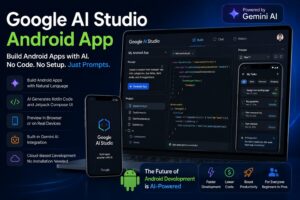
Google has officially taken a major step into the future of AI-powered software development with the expansion of the Google AI Studio Android app ecosystem. The company is now enabling developers, startups, and even beginners to build Android applications using simple natural language prompts powered by Gemini AI.
This move represents one of the biggest advancements in AI coding tools in 2026. Instead of manually writing thousands of lines of code, developers can now describe the type of Android application they want, and Google’s AI system generates working app structures, user interfaces, backend logic, and testing environments automatically.
The Google AI Studio Android app platform is quickly becoming one of the most talked-about AI software development tools because it dramatically simplifies Android app creation. By combining browser-based workflows, cloud AI infrastructure, and generative AI coding systems, Google is creating a powerful environment for the future of mobile app development.
For developers and businesses, this could significantly reduce development costs, improve productivity, and accelerate app launches.
What Is Google AI Studio Android App?
The Google AI Studio Android app platform is an AI-driven development environment designed to help users create native Android applications using conversational prompts. The platform is deeply integrated with Gemini AI and allows users to build apps directly inside a web-based workspace.
Traditionally, Android app development required complex setup processes including SDK installations, Android Studio configuration, emulator setup, debugging tools, and extensive coding knowledge. The Google AI Studio Android app experience removes many of these technical barriers.
Users can now:
- Generate Android apps with prompts
- Build Kotlin-based applications instantly
- Use Jetpack Compose interfaces automatically
- Test applications in browser-based emulators
- Integrate Gemini AI features directly
- Edit app structures using conversational commands
- Create prototypes within minutes
This is part of Google’s larger strategy to make AI-powered development more accessible for startups, creators, entrepreneurs, and enterprise software teams.
Why Google AI Studio Android App Is Important for Developers
The rise of AI coding tools has completely changed the software industry. Developers are increasingly relying on generative AI platforms to automate repetitive coding tasks, speed up debugging, and improve productivity.
The Google AI Studio Android app platform takes this idea even further.
Instead of only helping developers write code, the platform attempts to automate the entire Android development workflow. This includes app architecture, layout generation, component creation, and even deployment preparation.
This is especially valuable for:
- Indie developers
- Startup founders
- SaaS businesses
- Freelance app creators
- AI entrepreneurs
- Enterprise development teams
The biggest advantage is speed.
A mobile application that previously required weeks of development could potentially be prototyped in hours using AI-generated workflows. That dramatically changes the economics of Android app development.
Google AI Studio Android App and Gemini AI Integration
One of the strongest features of the Google AI Studio Android app ecosystem is deep Gemini AI integration.
Google is not simply offering a coding assistant. Instead, it is building a complete AI-native software development platform connected to its broader ecosystem.
Developers can integrate:
- Gemini AI chat systems
- AI voice assistants
- AI summarization tools
- AI image generation
- AI automation workflows
- Multimodal AI experiences
- Productivity AI systems
Because Google controls Android, Gemini AI, and Google Cloud infrastructure, the company can optimize the entire development pipeline more efficiently than many competitors.
This vertical integration gives Google a massive advantage in the AI development market.
AI Coding Tools Are Becoming the Future of Software Engineering
The Google AI Studio Android app launch reflects a larger trend happening across the tech industry. AI software development is rapidly replacing traditional coding workflows for many common tasks.
Developers are now using AI for:
- Code generation
- UI design
- App testing
- Error detection
- Backend configuration
- Documentation
- API integration
The shift toward AI-assisted development is creating a new category of “vibe coding,” where software is built primarily through instructions and prompts instead of manual programming.
Google clearly wants to dominate this market.
The company is aggressively expanding Gemini AI into:
- Android
- Search
- Workspace
- Chrome
- YouTube
- Cloud services
- Developer platforms
The Google AI Studio Android app ecosystem is now a central part of this strategy.
How Google AI Studio Android App Simplifies Development
One reason the Google AI Studio Android app platform is gaining attention is because it dramatically reduces complexity for new developers.
Traditional Android development often requires:
- Local machine setup
- SDK installations
- Emulator management
- Kotlin expertise
- UI coding experience
- Gradle configuration
- Device debugging
Google’s AI-powered platform automates much of this process.
For example, a user can simply type:
“Create a budgeting app with dark mode, expense tracking, and Gemini AI financial suggestions.”
The system can then generate:
- App screens
- Navigation systems
- Database structures
- Functional UI components
- AI integration layers
This significantly lowers the learning curve for beginners.
Google AI Studio Android App Could Disrupt the App Industry
The mobile app industry is worth billions of dollars, and AI-generated software may completely transform how apps are built and monetized.
The Google AI Studio Android app ecosystem could impact:
- App development agencies
- Freelance developers
- Startup incubation
- SaaS business creation
- Educational coding programs
- Enterprise software teams
Smaller teams may now compete with larger development companies because AI reduces production time.
This creates new opportunities for:
- AI startup founders
- Mobile app entrepreneurs
- Solopreneurs
- Content creators
- Automation businesses
As AI coding tools improve, app development may become more accessible to non-technical creators.
Google AI Studio Android App vs Traditional Android Studio
Although traditional Android Studio remains powerful for professional developers, the Google AI Studio Android app platform focuses heavily on simplicity and speed.
Key Differences
| Feature | Google AI Studio Android App | Traditional Android Studio |
|---|---|---|
| AI Code Generation | Built-In | Limited |
| Browser-Based Workflow | Yes | No |
| Setup Complexity | Very Low | High |
| Gemini AI Integration | Native | Manual |
| Coding Requirement | Minimal | Extensive |
| Emulator Access | Cloud-Based | Local |
| Beginner Friendly | High | Moderate |
| Prototype Speed | Extremely Fast | Slower |
This comparison highlights why AI-driven development platforms are becoming increasingly attractive.
Google AI Studio Android App and the Future of AI Business
The rise of AI-powered development platforms is also creating enormous advertising and business opportunities.
High CPC industries connected to this trend include:
- AI software development
- Cloud AI infrastructure
- Enterprise AI solutions
- Mobile app monetization
- AI automation platforms
- AI coding tools
- Generative AI services
Because of this, content related to Google AI Studio Android app development has strong RPM potential for publishers and technology websites.
Businesses are actively investing in AI transformation strategies, and Google wants AI Studio to become a major entry point for developers entering the AI economy.
Can Beginners Use Google AI Studio Android App?
Yes, beginners can absolutely use the platform.
Google’s primary goal appears to be lowering the barrier to entry for Android app development. The AI system handles much of the technical complexity automatically.
However, there are still important limitations.
Developers should still understand:
- App privacy rules
- Security best practices
- Performance optimization
- Google Play Store policies
- API management
- User experience principles
AI-generated apps still require human review and refinement.
Even though AI can accelerate development, experienced developers remain extremely important for quality assurance and advanced engineering tasks.
Why Google AI Studio Android App Could Become Mainstream
The biggest reason the Google AI Studio Android app platform may succeed is convenience.
Modern developers increasingly prefer:
- Cloud-based workflows
- Fast prototyping
- AI-assisted coding
- Mobile-friendly development
- Cross-device collaboration
- Instant deployment systems
Google is combining all of these trends into one ecosystem powered by Gemini AI.
If adoption continues growing, AI-driven development platforms could become the standard way apps are created in the future.
Final Verdict
The Google AI Studio Android app ecosystem represents one of the most important AI development announcements of 2026. By allowing users to create Android applications through natural language prompts, Google is dramatically simplifying the software development process.
The platform combines generative AI, cloud infrastructure, Android app creation, and Gemini AI integration into a single workflow that could reshape mobile software engineering.
For startups, developers, businesses, and content creators, the Google AI Studio Android app platform offers faster development, lower technical barriers, and powerful AI-assisted productivity tools.
As AI coding systems continue improving, the future of app development may rely less on manual programming and more on intelligent conversational software creation.

Rakesh is a digital publisher and SEO-focused tech writer covering technology trends, blogging strategies, affiliate marketing, and trending news. With expertise in search optimization and online growth, he delivers research-driven insights, practical guides, and timely news updates. His content focuses on helping readers understand digital trends, emerging technologies, and effective online publishing strategies in a rapidly evolving tech landscape.
Leave a Reply