OpenAI Free AI Image Verification Tool Launch Sparks New Fight Against Deepfakes
Overview :
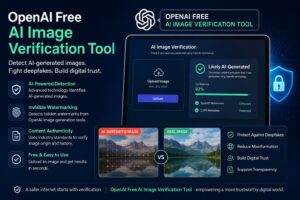
OpenAI has introduced a free AI image verification tool designed to identify AI-generated images and combat the growing deepfake crisis online. The system uses advanced watermark detection and content authenticity standards to help users verify whether images were created using OpenAI technologies. The launch arrives at a critical time as AI-generated misinformation, fake social media content, and synthetic media scams continue to rise globally.
OpenAI Free AI Image Verification Tool Could Change Online Security Forever
Artificial intelligence is evolving at an extraordinary speed. AI tools can now create realistic human faces, celebrity images, fake news visuals, and manipulated political content within seconds. While this technology has unlocked major creative opportunities, it has also created serious concerns around misinformation and deepfakes.
To address this growing problem, OpenAI has officially launched a free AI image verification tool aimed at helping users identify AI-generated visuals more effectively. The OpenAI free AI image verification tool is designed to detect whether an image was created using OpenAI systems such as ChatGPT image generation and DALL·E.
The launch represents one of the biggest steps yet toward improving trust and transparency in the artificial intelligence industry. As deepfake technology becomes increasingly advanced, experts believe AI verification tools may soon become essential across journalism, cybersecurity, finance, education, and social media platforms.
Also Read: OpenAI Weights.gg Acquisition Sparks Panic Over AI Voice Cloning as Deepfake Fears Explode
Why the OpenAI Free AI Image Verification Tool Matters
The internet is currently experiencing a massive surge in synthetic media. AI-generated content is spreading rapidly across social platforms, websites, forums, and messaging apps. Many fake images now look nearly identical to real photographs, making it difficult for ordinary users to separate truth from manipulation.
This is where the OpenAI free AI image verification tool becomes important.
The tool helps users verify whether a visual was created using OpenAI’s AI systems. This can help reduce misinformation, improve digital trust, and limit the spread of manipulated media online.
The demand for deepfake detection software has increased sharply in recent years due to rising concerns involving:
- Election misinformation
- Online scams
- Financial fraud
- Fake celebrity content
- Cybersecurity threats
- AI impersonation
- Brand reputation damage
- Social engineering attacks
Governments and technology companies worldwide are now investing heavily in AI safety and content verification technologies.
How the OpenAI Free AI Image Verification Tool Works
The OpenAI free AI image verification tool uses advanced detection systems that analyze AI-generated signals embedded inside images.
The platform focuses on identifying whether content was created using OpenAI image generation technologies.
Invisible Watermark Technology
One of the key technologies behind the OpenAI free AI image verification tool is invisible watermarking. Unlike visible watermarks placed on top of images, invisible watermarks are embedded deep within the image structure.
These hidden signals remain detectable even if the image is:
- Cropped
- Resized
- Compressed
- Slightly edited
- Shared across platforms
This makes the system far more reliable than older metadata-only approaches.
Content Authenticity Standards
The OpenAI free AI image verification tool also supports modern content authenticity frameworks that help track digital image origins.
These standards can reveal:
- Whether AI was used
- Editing history
- Source information
- Image generation details
- Content modification data
As more companies adopt these standards, experts believe the internet could move toward a more transparent AI ecosystem.
Deepfake Threats Are Growing Rapidly
Deepfake technology has improved dramatically over the past two years. AI-generated visuals now appear highly realistic, often fooling millions of users online.
Cybersecurity researchers warn that deepfakes are becoming a major global threat because they can be used for:
- Political propaganda
- Identity theft
- Financial scams
- Fake evidence creation
- Celebrity impersonation
- Corporate fraud
- Social manipulation
The OpenAI free AI image verification tool arrives at a critical moment as businesses and governments search for better ways to fight synthetic media abuse.
Experts predict that AI-generated misinformation could become one of the biggest cybersecurity challenges of the decade.
Why Journalists and News Platforms Need AI Verification Tools
Modern newsrooms face increasing pressure to verify digital content quickly. Viral AI-generated images can spread across social media before fact-checkers have time to respond.
The OpenAI free AI image verification tool could become extremely useful for:
- News organizations
- Digital publishers
- Independent journalists
- Fact-checking agencies
- Research institutions
By quickly checking image authenticity, media professionals may reduce the risk of publishing manipulated visuals.
This is especially important during elections, global conflicts, celebrity controversies, and breaking news events where fake visuals can spread rapidly.
OpenAI Free AI Image Verification Tool and Election Security
One of the biggest concerns surrounding AI-generated media is election interference.
Deepfake videos and fake political images have already appeared in multiple countries during election campaigns. AI-generated speeches, manipulated rallies, and fake interviews can easily mislead voters online.
The OpenAI free AI image verification tool may help reduce these risks by allowing researchers and journalists to authenticate suspicious visuals more effectively.
Governments around the world are now exploring regulations that could require AI-generated content labeling and transparency standards.
As election misinformation continues to rise globally, AI verification technology may soon become a standard requirement for digital platforms.
Businesses Are Investing Heavily in AI Cybersecurity
The launch of the OpenAI free AI image verification tool also highlights the rapid growth of the AI cybersecurity industry.
Businesses are increasingly spending money on:
- Deepfake detection software
- Enterprise AI security
- Fraud prevention systems
- Identity verification tools
- Cloud cybersecurity
- AI governance platforms
- Digital trust infrastructure
This sector is expected to become a multi-billion-dollar industry over the next several years.
For publishers and technology websites, topics related to AI security and deepfake detection also attract high-value advertising markets, especially in enterprise software and cybersecurity sectors.
Can the OpenAI Free AI Image Verification Tool Detect Every AI Image?
Although the OpenAI free AI image verification tool is highly advanced, experts say no detection system is perfect.
Some limitations include:
Heavy Image Editing
If a generated image is heavily modified, detection accuracy may decrease.
Metadata Removal
Certain apps and platforms remove image metadata during uploads and downloads.
Cross-Platform AI Content
Images generated using other AI platforms may not always be detected accurately.
Advanced Manipulation
Sophisticated attackers may eventually develop methods to bypass watermark systems.
Despite these challenges, the OpenAI free AI image verification tool still represents a major advancement in digital authenticity verification.
AI Transparency Is Becoming a Global Priority
Technology companies are now under increasing pressure to build safer AI systems.
The launch of the OpenAI free AI image verification tool reflects a broader industry movement focused on:
- Responsible AI
- Ethical AI development
- Content provenance
- AI transparency
- Digital trust
- Online misinformation reduction
Regulators across Europe, the United States, India, and other regions are actively discussing new AI transparency laws.
Future regulations may require companies to clearly label AI-generated media and implement stronger content verification systems.
Why AI Verification Could Become Standard Technology
Experts believe AI verification systems may eventually become integrated directly into:
- Social media platforms
- Search engines
- Web browsers
- Messaging apps
- News websites
- Enterprise security systems
In the future, users may automatically see authenticity indicators attached to online images, videos, and audio content.
The OpenAI free AI image verification tool could represent the beginning of this larger transformation toward verified digital media ecosystems.
The Future of Deepfake Detection
As AI-generated content becomes more realistic, detection systems will also continue evolving.
Future AI verification tools may include:
- Real-time deepfake scanning
- Video authenticity analysis
- AI audio verification
- Blockchain-based content tracking
- Advanced forensic AI systems
Technology experts believe the battle between AI generation and AI detection will continue for many years.
The companies that succeed in building trusted verification infrastructure could play a major role in shaping the future of the internet.
Conclusion:
The launch of the OpenAI free AI image verification tool marks a major turning point in the fight against AI-generated misinformation and deepfake abuse.
As synthetic media becomes increasingly realistic, tools that verify image authenticity will become more important than ever. OpenAI’s new verification system aims to improve trust, transparency, and safety across the digital ecosystem.
Although no AI detector is completely perfect, the OpenAI free AI image verification tool represents a significant step toward building a safer internet where users can better identify manipulated content.
With deepfake threats expected to grow rapidly over the coming years, AI verification technology may soon become essential for journalists, businesses, governments, and everyday internet users worldwide.

Rakesh is a digital publisher and SEO-focused tech writer covering technology trends, blogging strategies, affiliate marketing, and trending news. With expertise in search optimization and online growth, he delivers research-driven insights, practical guides, and timely news updates. His content focuses on helping readers understand digital trends, emerging technologies, and effective online publishing strategies in a rapidly evolving tech landscape.
Leave a Reply