LG QNED evo Mini LED 2026 vs Samsung Neo QLED 2026: Ultimate Comparison Guide (2026)
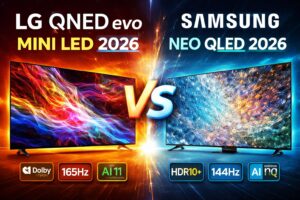
If you’re planning to upgrade your TV in 2026, the battle between LG QNED evo Mini LED 2026 vs Samsung Neo QLED 2026 is one of the most important comparisons you’ll come across. Both brands dominate the premium Mini LED TV segment, and their latest 2026 models push display technology, AI processing, and gaming features to the next level.
But which one should you actually buy?
In this detailed comparison of LG QNED evo Mini LED 2026 vs Samsung Neo QLED 2026, we break down everything—from display technology and brightness to gaming performance and real-world usability—so you can make the best decision.
What is LG QNED evo Mini LED 2026?
LG’s QNED evo Mini LED 2026 lineup is an evolution of its Quantum Dot + NanoCell + Mini LED technology. It combines multiple display enhancements into a single panel to deliver better color accuracy, wider viewing angles, and improved contrast.
Unlike traditional LED TVs, QNED uses thousands of Mini LEDs for backlighting, allowing precise local dimming and improved HDR performance.
Key Features:
- Quantum Dot + NanoCell combination
- Mini LED backlighting with thousands of dimming zones
- Dolby Vision HDR support
- Wide viewing angles (IPS panel)
- AI-powered α11 processor enhancements
In the LG QNED evo Mini LED 2026 vs Samsung Neo QLED 2026 comparison, LG focuses heavily on color accuracy and viewing flexibility.
What is Samsung Neo QLED 2026?
Samsung’s Neo QLED 2026 series is its premium Mini LED TV lineup, powered by Quantum Mini LEDs and advanced AI processors.
Neo QLED TVs use ultra-small LEDs that improve brightness, contrast, and HDR precision.
Key Features:
- Quantum Dot technology
- Mini LED backlighting with high precision
- HDR10+ support (no Dolby Vision)
- VA panel for deeper blacks
- Advanced AI Vision processing (NQ AI Gen processors)
Samsung’s focus in the LG QNED evo Mini LED 2026 vs Samsung Neo QLED 2026 debate is on brightness, contrast, and gaming performance.
LG QNED evo Mini LED 2026 vs Samsung Neo QLED 2026: Core Differences
1. Display Technology
Both TVs use Mini LED and Quantum Dot technology, but implementation differs.
- LG QNED: Combines Quantum Dot + NanoCell + IPS panel
- Samsung Neo QLED: Uses Quantum Dot + VA panel
Mini LED allows thousands of dimming zones for better contrast and HDR performance.
👉 Verdict:
Samsung wins in contrast; LG wins in viewing angles.
2. Brightness & HDR Performance
Brightness is where Samsung dominates.
- Samsung Neo QLED 2026 delivers higher peak brightness and better HDR highlights.
- LG QNED evo offers balanced brightness with superior color consistency.
Samsung’s Mini LED precision enhances HDR scenes with deeper highlights and shadows.
👉 Verdict:
Samsung Neo QLED is better for bright rooms and HDR impact.
3. Contrast & Black Levels
- Samsung (VA panel): Deeper blacks and stronger contrast
- LG (IPS panel): Slightly weaker blacks but more uniform image
👉 Verdict:
Samsung clearly leads in contrast performance.
4. Color Accuracy
LG’s NanoCell technology filters unwanted light wavelengths, improving color purity.
Samsung relies on Quantum Dot for vibrant colors.
👉 Verdict:
LG QNED evo is slightly better for color accuracy, especially for creators.
5. Viewing Angles
- LG QNED: Wide viewing angles (ideal for large rooms)
- Samsung Neo QLED: Narrower viewing angles
👉 Verdict:
LG is better for group watching.
6. Gaming Performance
Gaming is a major factor in LG QNED evo Mini LED 2026 vs Samsung Neo QLED 2026.
LG QNED evo 2026:
- Up to 165Hz VRR (reported enhancements)
- Game dashboard & cloud gaming support
Samsung Neo QLED 2026:
- Motion Xcelerator up to 144Hz
- VRR, ALLM, FreeSync Premium
- AI Game Mode
👉 Verdict:
Samsung slightly edges ahead due to better gaming ecosystem and optimization.
7. Smart Features & AI
LG:
- webOS 26
- AI Picture Pro & AI Super Upscaling
Samsung:
- Tizen OS
- Vision AI features (real-time enhancements, content optimization)
👉 Verdict:
Tie — both offer advanced AI-driven features.
8. HDR Format Support
- LG: Dolby Vision, HDR10, HLG
- Samsung: HDR10, HDR10+, HLG (no Dolby Vision)
👉 Verdict:
LG wins for Dolby Vision support.
9. Design & Build
Both brands offer ultra-slim designs with premium finishes.
- Samsung focuses on minimal bezels and sleek aesthetics
- LG offers elegant, minimalistic design with slim profiles
👉 Verdict:
Tie — depends on personal preference.
10. Pricing & Value
Samsung typically prices Neo QLED slightly higher due to premium positioning and brand perception.
LG often offers better value for similar specs.
👉 Verdict:
LG offers better value for money.
Real-World Performance: Which is Better?
Choose LG QNED evo Mini LED 2026 if:
- You want wide viewing angles
- You prefer Dolby Vision content
- You care about color accuracy
- You want better value
Choose Samsung Neo QLED 2026 if:
- You want maximum brightness
- You watch in bright rooms
- You prioritize gaming performance
- You want deeper blacks
Pros and Cons
LG QNED evo Mini LED 2026
Pros:
- Excellent color accuracy
- Wide viewing angles
- Dolby Vision support
- Better value
Cons:
- Lower contrast than Samsung
- Slightly weaker blacks
Samsung Neo QLED 2026
Pros:
- Superior brightness
- Better contrast
- Strong gaming features
- Advanced AI enhancements
Cons:
- No Dolby Vision
- Narrower viewing angles
Final Verdict: LG QNED evo Mini LED 2026 vs Samsung Neo QLED 2026
The winner in the LG QNED evo Mini LED 2026 vs Samsung Neo QLED 2026 comparison depends entirely on your usage.
- Best overall for most users: Samsung Neo QLED 2026
- Best for value & versatility: LG QNED evo Mini LED 2026
If you want the best cinematic experience with deep blacks and high brightness, Samsung is the better pick.
But if you want balanced performance with better viewing angles and Dolby Vision support, LG is the smarter choice.
Conclusion
The competition between LG QNED evo Mini LED 2026 vs Samsung Neo QLED 2026 shows how far Mini LED technology has evolved. Both TVs deliver premium performance and are excellent alternatives to OLED, especially for bright rooms and gaming setups.
Ultimately, your choice should depend on:
- Room lighting conditions
- Content preferences
- Budget
No matter which you pick, both TVs represent the future of high-end display technology in 2026.

Rakesh is a digital publisher and SEO-focused tech writer covering technology trends, blogging strategies, affiliate marketing, and trending news. With expertise in search optimization and online growth, he delivers research-driven insights, practical guides, and timely news updates. His content focuses on helping readers understand digital trends, emerging technologies, and effective online publishing strategies in a rapidly evolving tech landscape.
Leave a Reply