Meta Partners with EssilorLuxottica for New Smart Glasses as AI Wearable Competition Intensifies
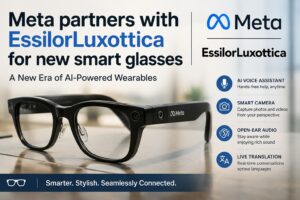
The global wearable technology market is entering a new phase of innovation as Meta partners with EssilorLuxottica for new smart glasses, bringing advanced artificial intelligence features to a wider audience. The collaboration combines Meta’s expertise in AI and software with EssilorLuxottica’s leadership in eyewear design and manufacturing, creating a product lineup aimed at accelerating mainstream adoption of smart glasses.
As competition among technology giants intensifies, the latest move highlights how AI-powered wearables are rapidly becoming one of the most important categories in consumer electronics. Industry analysts believe the partnership could significantly strengthen Meta’s position in the growing market for smart eyewear and wearable computing devices.
Also read: Apple Smart Glasses 2026 Leak: 4 Premium Designs, Powerful AI Features & iPhone Integration Revealed
Why Meta Partners with EssilorLuxottica for New Smart Glasses
The partnership is strategically important because it combines strengths from two different industries. While Meta has invested heavily in artificial intelligence, augmented reality, and wearable technology, EssilorLuxottica brings decades of experience in creating stylish, comfortable, and globally recognized eyewear products.
One challenge that has historically limited smart glasses adoption is design. Consumers want wearable technology that looks and feels like traditional eyewear. By working together, the companies aim to bridge the gap between advanced technology and fashionable design.
The decision to have Meta partners with EssilorLuxottica for new smart glasses reflects a growing belief that future computing experiences will move beyond smartphones and become integrated into everyday accessories.
The Growing Demand for AI-Powered Smart Glasses
Artificial intelligence is changing how people interact with technology. Instead of typing commands or navigating multiple applications, users increasingly prefer voice-driven experiences that provide instant assistance.
This trend has fueled interest in:
- Affordable AI smart glasses with voice assistant
- Smart glasses with camera and AI features
- Wearable AI assistant glasses
- Next-generation smart eyewear technology
- AI-powered wearable devices for everyday use
Consumers are looking for products that improve convenience without adding complexity. Smart glasses powered by artificial intelligence have the potential to deliver information, communication, navigation, and entertainment directly through a lightweight wearable device.
Key Features Expected in the New Smart Glasses
AI Voice Assistant Integration
One of the most significant features of modern smart glasses is AI-powered voice assistance. Users can interact naturally with the device while keeping their hands free.
Potential use cases include:
- Real-time information searches
- Calendar management
- Navigation support
- Messaging and communication
- Travel assistance
- Productivity enhancement
As AI models become more advanced, smart glasses could serve as personal digital assistants available throughout the day.
Smart Camera Technology
The latest generation of wearable devices continues to focus on content creation. Integrated cameras allow users to capture photos and videos from a first-person perspective, making them appealing to creators, travelers, and social media enthusiasts.
The demand for smart glasses with camera and AI features continues to increase as users seek more natural ways to record experiences.
Open-Ear Audio Experience
Unlike traditional headphones, open-ear audio systems enable users to remain aware of their surroundings while listening to music, receiving calls, or interacting with AI assistants.
This functionality improves safety and creates a more comfortable experience for all-day use.
How the Partnership Could Transform the Wearable Technology Market
The announcement that Meta partners with EssilorLuxottica for new smart glasses comes at a time when the wearable technology industry is becoming increasingly competitive.
Several major technology companies are investing billions into:
- Artificial intelligence
- Augmented reality
- Mixed reality
- Spatial computing
- Smart wearables
Industry experts believe smart glasses could eventually become one of the primary interfaces for digital interaction.
Rather than constantly looking down at smartphones, users may access information through voice commands and contextual AI assistance delivered directly through wearable devices.
Affordable AI Smart Glasses Could Accelerate Adoption
Price remains one of the biggest factors influencing consumer adoption.
Many early smart glasses products were positioned as premium devices with high price tags, limiting their appeal to enthusiasts and developers. However, the growing market for affordable AI smart glasses with voice assistant capabilities suggests that consumers are ready for more accessible options.
A lower-cost strategy could help bring smart eyewear into the mainstream by making advanced AI features available to a broader audience.
This approach mirrors the evolution of smartphones, which initially targeted premium users before becoming everyday devices used by billions worldwide.
What Competitors Are Missing
While many discussions focus on hardware specifications, several important topics are often overlooked.
Smart Glasses as a Search Platform
Most consumers currently access information through smartphones, tablets, or computers. AI-powered smart glasses introduce a new method of interacting with digital content.
Instead of opening applications and typing searches, users can simply ask questions and receive immediate answers.
This shift has the potential to redefine online search behavior and digital engagement over the next decade.
Context-Aware Artificial Intelligence
Future wearable AI systems may understand context more effectively than smartphones.
For example, smart glasses could:
- Recognize landmarks
- Translate signs instantly
- Provide location-specific information
- Offer contextual recommendations
- Assist with navigation in real time
These capabilities could significantly improve the user experience and create entirely new categories of AI-powered services.
Enterprise Opportunities Beyond Consumer Use
Although consumer adoption attracts most attention, enterprise applications may represent a significant growth opportunity.
Healthcare
Medical professionals can access information hands-free while working with patients.
Logistics
Warehouse operations can become more efficient through wearable navigation and task management systems.
Manufacturing
Workers can receive real-time instructions without interrupting workflows.
Education
Students and teachers can benefit from interactive learning experiences powered by wearable AI technology.
The partnership between Meta and EssilorLuxottica may eventually extend beyond consumer products into specialized business and enterprise solutions.
Privacy and Security Challenges Remain
As wearable devices become more sophisticated, privacy concerns continue to play an important role in adoption decisions.
Consumers frequently raise questions about:
- Data collection
- Camera usage
- Voice recordings
- AI-generated recommendations
- Personal information security
Companies entering the AI wearable market must prioritize transparency and user control if they hope to build long-term trust.
Privacy protections could become a key differentiator as competition in the smart glasses market intensifies.
The Future of AI-Powered Wearable Technology
The announcement that Meta partners with EssilorLuxottica for new smart glasses reflects a broader industry shift toward wearable computing.
Several trends support long-term growth:
- Advances in artificial intelligence
- Improved battery efficiency
- Faster wireless connectivity
- Enhanced voice recognition
- Growing consumer interest in hands-free technology
As these technologies mature, smart glasses could evolve into everyday devices used for communication, productivity, entertainment, and information access.
Final Verdict
The decision that Meta partners with EssilorLuxottica for new smart glasses represents a major milestone for the wearable technology industry. By combining advanced AI capabilities with premium eyewear expertise, the companies are creating a compelling vision for the future of smart wearables.
As demand grows for affordable AI smart glasses with voice assistant features, this partnership could help accelerate mainstream adoption and strengthen the role of smart glasses in everyday life.
With the AI wearable race heating up, Meta and EssilorLuxottica are positioning themselves at the center of one of the most important technology trends of the next decade.

Rakesh is a digital publisher and SEO-focused tech writer covering technology trends, blogging strategies, affiliate marketing, and trending news. With expertise in search optimization and online growth, he delivers research-driven insights, practical guides, and timely news updates. His content focuses on helping readers understand digital trends, emerging technologies, and effective online publishing strategies in a rapidly evolving tech landscape.
Leave a Reply