Microsoft AI Wearable is an emerging workplace technology designed to connect employees with AI agents in real time. The device could support task automation, meeting intelligence, workflow management, and enterprise productivity through continuous AI assistance.
Microsoft AI Wearable Could Revolutionize the Future of Work With AI Agents
Microsoft AI Wearable Brings Artificial Intelligence Closer to Employees
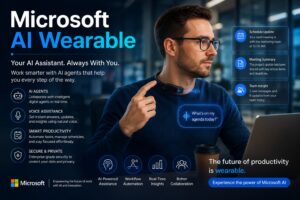
Artificial intelligence is rapidly changing how businesses operate, collaborate, and make decisions. As organizations continue investing in advanced AI technologies, a new development from Microsoft is drawing attention across the tech industry. The company’s reported work on a Microsoft AI Wearable device highlights a future where employees can interact with intelligent digital agents more naturally and efficiently throughout the workday.
The concept of a Microsoft AI Wearable goes beyond traditional smart devices. Rather than simply displaying notifications or tracking health data, the wearable is expected to serve as a direct bridge between workers and AI-powered digital assistants. This approach aligns with Microsoft’s broader strategy of integrating AI into everyday workflows, helping employees access information, automate tasks, and improve productivity without constantly switching between applications.
As enterprises increasingly adopt AI-driven tools, the Microsoft AI Wearable could become a key component of the modern workplace. By providing real-time access to digital agents and enterprise data, the technology may fundamentally reshape how professionals interact with software, information, and business processes.
The Growing Importance of AI in the Workplace
Artificial intelligence is no longer limited to research labs or experimental projects. Today, businesses use AI to automate repetitive tasks, analyze large volumes of data, improve customer experiences, and streamline operations.
From customer support to project management, AI systems are becoming deeply embedded in daily workflows. Employees increasingly rely on intelligent assistants to draft documents, summarize meetings, generate reports, and provide actionable insights.
The introduction of a Microsoft AI Wearable reflects this shift toward more integrated AI experiences. Rather than requiring employees to open multiple software platforms, the wearable could provide immediate access to AI capabilities whenever they are needed.
This seamless interaction could reduce distractions, improve focus, and help workers complete tasks more efficiently.
How Microsoft AI Wearable Could Transform Employee Productivity
One of the most compelling aspects of the Microsoft AI Wearable is its potential impact on workplace productivity.
Modern employees often spend significant time navigating emails, communication platforms, project management tools, and business applications. Constant context switching can reduce efficiency and increase cognitive load.
A Microsoft AI Wearable could address these challenges by acting as a continuous AI companion throughout the workday.
Potential benefits may include:
- Instant access to workplace information
- AI-powered task management
- Real-time workflow assistance
- Meeting summaries and action items
- Voice-controlled productivity tools
- Context-aware recommendations
- Faster access to enterprise knowledge
By delivering these capabilities through a wearable device, Microsoft could create a more natural and intuitive user experience.
Microsoft’s Vision of AI Agents as Digital Coworkers
A major trend shaping the future of work is the emergence of AI agents.
Unlike traditional chatbots, AI agents can perform complex tasks, manage workflows, and execute actions on behalf of users. They are designed to function more like digital coworkers than simple software tools.
Microsoft has been actively promoting the concept of AI agents across its enterprise ecosystem. These intelligent systems can assist with scheduling, data analysis, project coordination, customer interactions, and business operations.
The Microsoft AI Wearable appears to be designed with this vision in mind.
Rather than forcing users to interact with AI through a computer screen, the wearable could enable continuous collaboration with digital agents throughout the day.
This represents a significant shift in how people may work with artificial intelligence in the future.
Real-Time AI Assistance Anywhere
One of the strongest advantages of the Microsoft AI Wearable could be its ability to provide real-time assistance regardless of location.
Employees working remotely, traveling, or moving between meetings often need quick access to information. Opening multiple applications can slow productivity and create unnecessary friction.
With a wearable interface, workers may be able to:
- Ask business-related questions
- Access company knowledge bases
- Receive task reminders
- Generate summaries
- Manage schedules
- Obtain project updates
These interactions could occur through voice commands, making the experience faster and more convenient.
Such capabilities would help employees stay informed and productive without interrupting their workflow.
AI-Powered Meeting Intelligence
Meetings remain one of the most time-consuming aspects of modern business operations.
Many professionals spend hours each week attending discussions, taking notes, and following up on action items.
The Microsoft AI Wearable could significantly improve this process through AI-powered meeting intelligence.
Potential features may include:
Automatic Meeting Summaries
The wearable could generate concise summaries of discussions, helping participants quickly review important points.
Action Item Tracking
AI systems may identify tasks, responsibilities, and deadlines automatically.
Real-Time Insights
Employees could receive contextual information during conversations, supporting better decision-making.
Knowledge Retrieval
The device may surface relevant documents, reports, or historical data when needed.
These features could save organizations substantial time while improving collaboration and accountability.
Integration With Microsoft’s Enterprise Ecosystem
One reason the Microsoft AI Wearable has generated significant interest is Microsoft’s extensive enterprise technology portfolio.
The company already provides a wide range of workplace solutions, including productivity software, cloud infrastructure, security platforms, and collaboration tools.
A wearable device connected to this ecosystem could create powerful synergies.
Employees may gain access to:
- Cloud-based enterprise data
- Workplace communication tools
- AI-generated business insights
- Security and compliance systems
- Organizational knowledge repositories
This level of integration could make the Microsoft AI Wearable particularly attractive to large enterprises already invested in Microsoft’s technology stack.
Security and Privacy Considerations
As wearable technology becomes more sophisticated, security and privacy remain critical concerns.
Businesses handling sensitive information require robust safeguards to protect data and ensure compliance with regulations.
For the Microsoft AI Wearable to achieve widespread adoption, strong security features will likely be essential.
Expected priorities include:
Identity Verification
Ensuring that only authorized users can access enterprise information.
Data Encryption
Protecting communications and stored information from unauthorized access.
Compliance Management
Supporting industry-specific regulatory requirements.
Access Controls
Allowing organizations to manage permissions and usage policies effectively.
Microsoft’s longstanding focus on enterprise security positions the company well to address these challenges.
Why Businesses Are Investing in AI Wearable Technology
The demand for AI-powered workplace tools continues to grow as organizations seek competitive advantages through digital transformation.
Businesses are looking for solutions that can:
- Increase efficiency
- Reduce operational costs
- Improve employee experiences
- Accelerate decision-making
- Enhance collaboration
The Microsoft AI Wearable aligns with these objectives by bringing AI capabilities directly into employees’ daily routines.
Rather than treating artificial intelligence as a separate application, Microsoft appears to be integrating it into the natural flow of work.
This approach could help organizations maximize the value of their AI investments while simplifying user experiences.
The Future of Human-AI Collaboration
The workplace of the future is expected to involve closer collaboration between humans and intelligent systems.
Employees will increasingly rely on AI agents to handle repetitive tasks, analyze information, and provide recommendations. Human workers, meanwhile, will focus on creativity, strategy, relationship-building, and critical thinking.
The Microsoft AI Wearable represents an important step toward this future.
By enabling continuous interaction with AI agents, the device could make artificial intelligence more accessible, practical, and effective in everyday business environments.
As AI capabilities continue advancing, wearable technology may become one of the most important interfaces connecting people with digital intelligence.
Microsoft AI Wearable Could Define the Next Generation of Work
The development of the Microsoft AI Wearable highlights how rapidly workplace technology is evolving. Businesses are moving beyond traditional software models and exploring new ways to integrate artificial intelligence into daily operations.
With real-time assistance, intelligent digital agents, workflow automation, and enterprise integration, the Microsoft AI Wearable has the potential to transform how employees work and collaborate.
While the technology is still emerging, it reflects a broader industry trend toward AI-first workplaces where humans and digital agents operate side by side. As organizations continue investing in artificial intelligence, the Microsoft AI Wearable could become a defining innovation in the next generation of enterprise productivity and workplace transformation.

Rakesh is a digital publisher and SEO-focused tech writer covering technology trends, blogging strategies, affiliate marketing, and trending news. With expertise in search optimization and online growth, he delivers research-driven insights, practical guides, and timely news updates. His content focuses on helping readers understand digital trends, emerging technologies, and effective online publishing strategies in a rapidly evolving tech landscape.
Leave a Reply