Your Boss May Be Watching Everything: Employee Monitoring Software Quietly Sharing Worker Data Raises Global Privacy Fears
Overview:
Employee monitoring software is facing major scrutiny after cybersecurity researchers revealed that several workplace tracking tools may be sharing employee data with systems connected to Google, Microsoft, and Meta. The findings have raised concerns over workplace privacy, AI surveillance, cybersecurity compliance, and the growing use of employee monitoring software in remote and hybrid work environments.
Employee Monitoring Software Under Fire After Shocking Privacy Findings
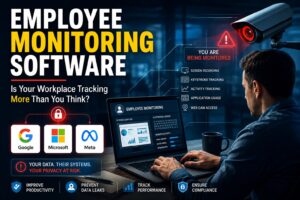
Employee monitoring software has become one of the most controversial workplace technologies in 2026. A new cybersecurity investigation has revealed that some employee monitoring software platforms may be quietly transmitting sensitive worker information to third-party systems linked to major technology companies including Google, Microsoft, and Meta.
The report has triggered global debate about digital privacy, workplace surveillance, enterprise cybersecurity, and ethical AI usage. As companies increasingly rely on employee monitoring software to track productivity and workforce activity, experts warn that the technology may be collecting far more data than employees realize.
The rise of employee monitoring software has accelerated dramatically over the last few years, especially after the global shift toward remote work and hybrid offices. Businesses now use advanced tracking tools to monitor employee performance, attendance, online behavior, communication patterns, and application usage.
However, privacy advocates say the growing use of employee monitoring software is creating a dangerous imbalance between corporate oversight and employee rights.
What Is Employee Monitoring Software?
Employee monitoring software is a digital workplace tool designed to track and analyze employee activities across computers, smartphones, cloud platforms, and enterprise networks.
Companies use employee monitoring software for multiple purposes, including:
- Productivity tracking
- Workforce analytics
- Cybersecurity monitoring
- Insider threat detection
- Attendance management
- Compliance reporting
- Remote workforce supervision
Modern employee monitoring software can record a wide range of employee behavior. Some platforms are capable of taking screenshots, logging keystrokes, tracking browsing history, monitoring emails, recording app usage, and even analyzing employee behavior using artificial intelligence.
Many organizations believe employee monitoring software improves operational efficiency and helps managers identify workflow bottlenecks. Yet critics argue the technology is becoming increasingly invasive.
Why The Latest Employee Monitoring Software Study Matters
The latest cybersecurity study has intensified concerns about how employee monitoring software handles sensitive data.
Researchers reportedly discovered that several monitoring platforms were connected to external analytics and advertising systems. These integrations potentially allowed employee data to flow through services associated with Google, Microsoft, and Meta.
The investigation found that employee monitoring software may interact with:
- Analytics platforms
- Advertising tools
- Cloud telemetry systems
- Behavioral tracking frameworks
- User engagement monitoring services
This has sparked fears that employee monitoring software may expose sensitive workplace information beyond internal corporate environments.
Cybersecurity analysts say many employees may not even realize how much information is being collected through workplace surveillance tools.
Employee Monitoring Software And The Rise Of AI Surveillance
One major reason employee monitoring software is expanding rapidly is the rise of artificial intelligence.
AI-powered employee monitoring software now offers advanced capabilities such as:
- Productivity scoring
- Automated behavior analysis
- Performance trend prediction
- Focus tracking
- Time management insights
- Real-time activity classification
Some enterprise systems even use AI algorithms to determine whether employees appear “engaged” during working hours.
Supporters claim AI-based employee monitoring software helps businesses improve productivity and reduce operational inefficiencies. However, critics warn that algorithm-driven workplace surveillance could create unhealthy work environments filled with constant pressure and reduced privacy.
Privacy experts also fear that AI systems embedded inside employee monitoring software may introduce hidden bias into workplace evaluations.
Remote Work Fueled Massive Growth In Employee Monitoring Software
The global work-from-home boom transformed employee monitoring software into a multi-billion-dollar industry.
When companies shifted toward remote operations, managers searched for ways to supervise employees outside traditional office environments. This demand caused rapid adoption of employee monitoring software across industries including:
- Information technology
- Financial services
- Healthcare
- Customer support
- BPO operations
- E-commerce companies
- Digital marketing agencies
Today, many organizations rely heavily on employee monitoring software to track productivity metrics and workforce efficiency.
Some platforms generate detailed reports measuring employee activity minute-by-minute. Others provide “productivity scores” based on keyboard usage, app activity, and screen time.
Critics argue that excessive reliance on employee monitoring software may damage workplace trust and employee morale.
The Biggest Privacy Risks Linked To Employee Monitoring Software
Sensitive Personal Information Could Be Collected
One of the biggest concerns surrounding employee monitoring software is the possibility of capturing highly sensitive information.
Depending on system permissions, monitoring platforms may access:
- Banking details
- Passwords
- Personal emails
- Healthcare information
- Private messages
- Financial records
- Confidential client data
If employee monitoring software sends data through external analytics systems, the risk of accidental exposure increases significantly.
Cybersecurity researchers warn that monitoring tools may unintentionally create massive privacy vulnerabilities inside organizations.
Third-Party Integrations Increase Security Risks
Modern enterprise software often relies on external cloud services and analytics providers. While these integrations help companies improve performance and reporting, they can also expand cybersecurity risks.
Employee monitoring software connected to third-party systems may create additional attack surfaces for cybercriminals.
If hackers compromise a monitoring platform, they could potentially gain access to:
- Employee credentials
- Internal business communications
- Company intellectual property
- Sensitive enterprise data
- Customer information
This is why cybersecurity experts are now urging organizations to conduct detailed privacy audits before deploying employee monitoring software.
Governments May Tighten Workplace Privacy Laws
The growing controversy around employee monitoring software could push governments toward stricter regulations.
Several countries are already reviewing policies related to:
- AI workplace surveillance
- Employee consent requirements
- Data retention policies
- Cross-border data transfers
- Workplace privacy protections
European regulators have historically enforced strong data protection rules under GDPR, and similar privacy-focused frameworks may expand globally.
Legal experts believe businesses using employee monitoring software may soon face tougher compliance obligations.
Companies that fail to properly disclose monitoring practices could risk legal action, regulatory penalties, and reputational damage.
Transparency Is Becoming Essential
Cybersecurity specialists say organizations must improve transparency around employee monitoring software usage.
Employees should clearly understand:
- What data is collected
- Why the information is collected
- How long data is stored
- Who can access the data
- Whether third parties receive the information
Without transparency, businesses may struggle to maintain employee trust.
Digital rights advocates argue that workers deserve full visibility into how employee monitoring software operates behind the scenes.
Why Businesses Continue Using Employee Monitoring Software
Despite rising criticism, employee monitoring software continues to grow rapidly because organizations see major operational advantages.
Businesses often use employee monitoring software to:
- Improve productivity
- Detect insider threats
- Reduce data leaks
- Monitor compliance
- Analyze workflow performance
- Manage hybrid teams
Large enterprises increasingly depend on workforce analytics to optimize operations and improve profitability.
Market analysts predict that the employee monitoring software industry will continue expanding as AI-powered enterprise management systems become more common.
Privacy-First Employee Monitoring Software Could Become The Future
As backlash increases, software vendors may begin shifting toward privacy-focused monitoring systems.
Future employee monitoring software platforms may prioritize:
- Minimal data collection
- Strong encryption
- Transparent consent tools
- Anonymous analytics
- Local device processing
- Advanced cybersecurity protections
Companies that promote ethical AI usage and privacy-first technology may gain a competitive advantage in the enterprise software market.
Experts believe the future success of employee monitoring software will depend heavily on balancing productivity goals with employee privacy rights.
Employee Monitoring Software Reflects A Bigger Global Problem
The debate surrounding employee monitoring software is part of a much larger conversation about AI surveillance and digital privacy.
Modern workplaces are becoming increasingly data-driven. Employees now rely on connected devices for communication, collaboration, financial management, healthcare access, and personal activities.
When employee monitoring software gains deep access to those devices, the line between workplace oversight and personal privacy becomes blurred.
Privacy advocates warn that unchecked workplace surveillance could normalize constant monitoring across digital life.
At the same time, businesses argue that cybersecurity threats and remote workforce management require stronger visibility into employee activity.
This conflict between enterprise security and individual privacy will likely shape the future of workplace technology for years to come.
Will Employee Monitoring Software Face More Regulation?
Many experts believe stronger regulations are inevitable.
Governments worldwide are paying closer attention to:
- AI-powered surveillance systems
- Enterprise cybersecurity risks
- Data privacy violations
- Digital worker protections
Regulators may eventually require companies to provide clearer disclosures about how employee monitoring software collects, processes, and shares user data.
Businesses that proactively adopt ethical monitoring practices could avoid future compliance problems while improving employee trust.
Conclusion:
Employee monitoring software is quickly becoming one of the most debated technologies in the modern workplace. While businesses see these tools as essential for productivity and cybersecurity, the latest privacy findings reveal serious concerns about data collection, AI surveillance, and third-party integrations.
As organizations continue adopting advanced workforce analytics systems, pressure will grow for stronger transparency, ethical AI practices, and improved employee privacy protections.
The future of employee monitoring software will depend on whether companies can balance operational efficiency with responsible data handling and digital trust.

Rakesh is a digital publisher and SEO-focused tech writer covering technology trends, blogging strategies, affiliate marketing, and trending news. With expertise in search optimization and online growth, he delivers research-driven insights, practical guides, and timely news updates. His content focuses on helping readers understand digital trends, emerging technologies, and effective online publishing strategies in a rapidly evolving tech landscape.
Leave a Reply